George Musser is an award-winning science writer and editor. He was a senior editor at Scientific American for 15 years and has written two books on fundamental physics, “The Complete Idiot’s Guide to String Theory” (2008) and “Spooky Action at a Distance” (2015). He has written for Science, Nature, Quanta, Aeon, Nautilus, The New York Times and other publications. His website is georgemusser.com. He tweets at @gmusser.
George Musser
Contributing writer
From this contributor
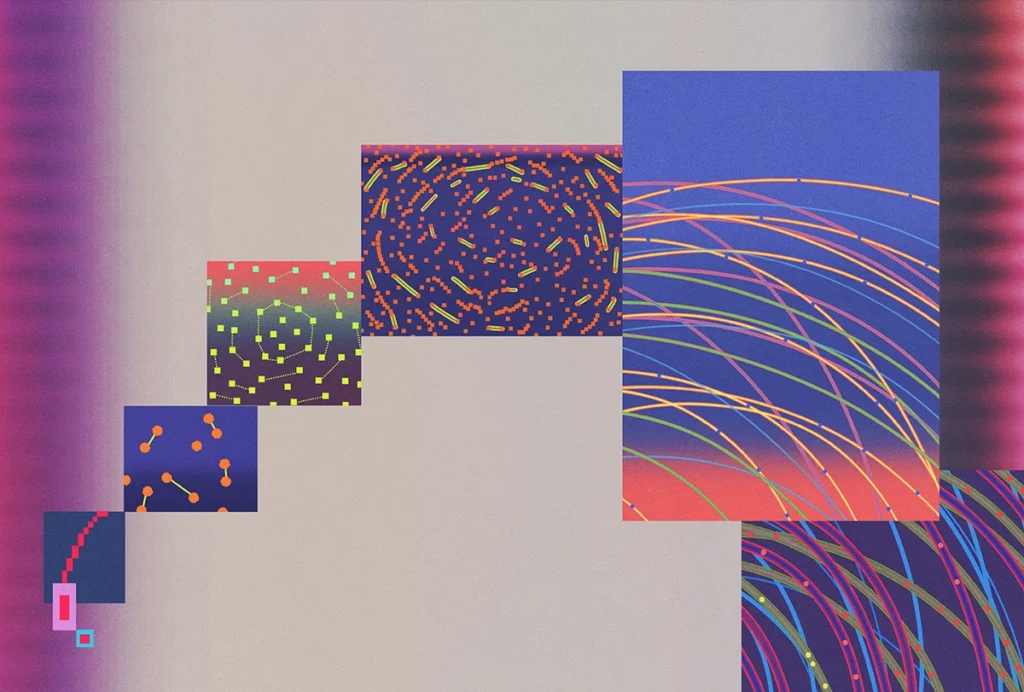
Can an emerging field called ‘neural systems understanding’ explain the brain?
This mashup of neuroscience, artificial intelligence and even linguistics and philosophy of mind aims to crack the deep question of what "understanding" is, however un-brain-like its models may be.
Can an emerging field called ‘neural systems understanding’ explain the brain?
By
George Musser
5 June 2024 | 21 min listen
How ‘social touch’ shapes autism traits
Autistic people have unusual responses to 'affective touch,' which conveys social and emotional information. Their responses may reveal how autism begins.
The predictive coding theory of autism, explained
In autism, a person's brain may not form accurate predictions of imminent experiences, or even if it does, sensory input may override those predictions.
How virtual reality is transforming autism studies
Researchers and autistic artists exploring virtual reality to study, treat and simulate autism traits.
How virtual reality is transforming autism studies
By
George Musser
24 October 2018 | 20 min read
How autism may stem from problems with prediction
A 'predictive coding' theory of autism suggests that many of the condition's hallmark traits occur when sensory input overrides expectation in the brain.
How autism may stem from problems with prediction
By
George Musser
7 March 2018 | 19 min read
Explore more from The Transmitter
Are Brains and AI Converging?—an excerpt from ‘ChatGPT and the Future of AI: The Deep Language Revolution’
In his new book, to be published next week, computational neuroscience pioneer Sejnowski tackles debates about AI’s capacity to mirror cognitive processes.
Are Brains and AI Converging?—an excerpt from ‘ChatGPT and the Future of AI: The Deep Language Revolution’
In his new book, to be published next week, computational neuroscience pioneer Sejnowski tackles debates about AI’s capacity to mirror cognitive processes.
By
Terrence Sejnowski
21 October 2024 | 12 min read
New tissue-clearing techniques let microscopes peer deeper into living brains
Washing mouse brain tissue with a blood protein or complex sugar can illuminate cells 550 micrometers into the cortex without compromising its normal physiology.
New tissue-clearing techniques let microscopes peer deeper into living brains
Washing mouse brain tissue with a blood protein or complex sugar can illuminate cells 550 micrometers into the cortex without compromising its normal physiology.
By
Calli McMurray
18 October 2024 | 0 min watch

New catalog charts familial ties from autism to 90 other conditions
The research tool reveals associations stretching across three generations.
New catalog charts familial ties from autism to 90 other conditions
The research tool reveals associations stretching across three generations.
By
Charles Q. Choi
17 October 2024 | 4 min read