Nicholette Zeliadt manages The Transmitters’s staff reporters and interns, and she commissions and edits news articles. She joined The Transmitter as news writer in 2014. Before that, she was a freelance writer and editor. Her work has appeared in The New York Times, Scientific American, Nature Medicine, Science and The Scientist.
Nicholette Zeliadt
Managing editor
The Transmitter
From this contributor
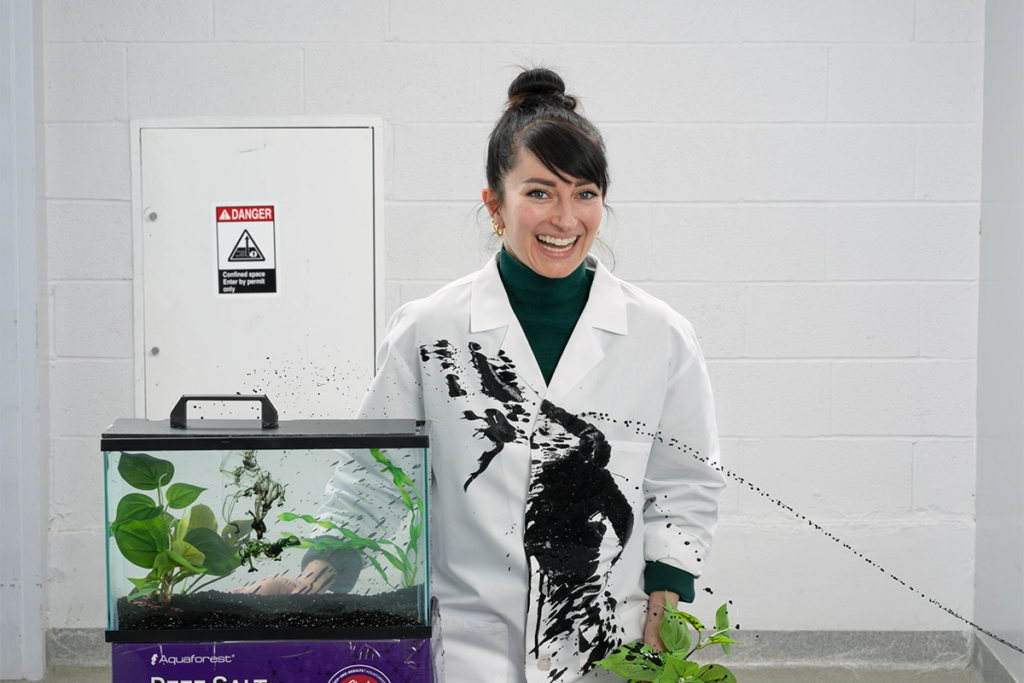
Leaving lasting marks with Tessa Montague
By
Nicholette Zeliadt
9 February 2024 | 7 min read
Spotted around the web: INSAR; cerebellar gene expression; pangenome
By
Jill Adams, Giorgia Guglielmi, Kristin Ozelli, Nicholette Zeliadt
12 May 2023 | 4 min read
Spotted around the web: Mapping histones; COVID-19 births; acetaminophen lawsuits
By
Jill Adams, Katharine Gammon, Peter Hess, Nicholette Zeliadt
4 November 2022 | 3 min read

New diagnostic code for PTEN syndrome may spur research
By
Nicholette Zeliadt
3 October 2022 | 4 min read
Education
- Ph.D. in environmental health, University of Minnesota
- B.A. in biochemistry, University of Iowa
Fellowships
- AAAS Mass Media Fellowship
Explore more from The Transmitter
Are Brains and AI Converging?—an excerpt from ‘ChatGPT and the Future of AI: The Deep Language Revolution’
In his new book, to be published next week, computational neuroscience pioneer Sejnowski tackles debates about AI’s capacity to mirror cognitive processes.
Are Brains and AI Converging?—an excerpt from ‘ChatGPT and the Future of AI: The Deep Language Revolution’
In his new book, to be published next week, computational neuroscience pioneer Sejnowski tackles debates about AI’s capacity to mirror cognitive processes.
By
Terrence Sejnowski
21 October 2024 | 12 min read
New tissue-clearing techniques let microscopes peer deeper into living brains
Washing mouse brain tissue with a blood protein or complex sugar can illuminate cells 550 micrometers into the cortex without compromising its normal physiology.
New tissue-clearing techniques let microscopes peer deeper into living brains
Washing mouse brain tissue with a blood protein or complex sugar can illuminate cells 550 micrometers into the cortex without compromising its normal physiology.
By
Calli McMurray
18 October 2024 | 0 min watch
New catalog charts familial ties from autism to 90 other conditions
The research tool reveals associations stretching across three generations.
New catalog charts familial ties from autism to 90 other conditions
The research tool reveals associations stretching across three generations.
By
Charles Q. Choi
17 October 2024 | 4 min read