Kevin Bender is professor of neurology at the University of California, San Francisco. His lab focuses on understanding how the brain encodes information at the synaptic, cellular and network level. Work primarily revolves around understanding how ion channels and modulation of ion channels contribute to these processes in health and in neurodevelopmental and neuropsychiatric conditions. This includes studies related to neurodevelopmental channelopathies, for which he is grateful to be able to work with close colleagues and partners from academia, industry and patient advocacy groups.
Kevin Bender
Professor of neurology
University of California, San Francisco
From this contributor
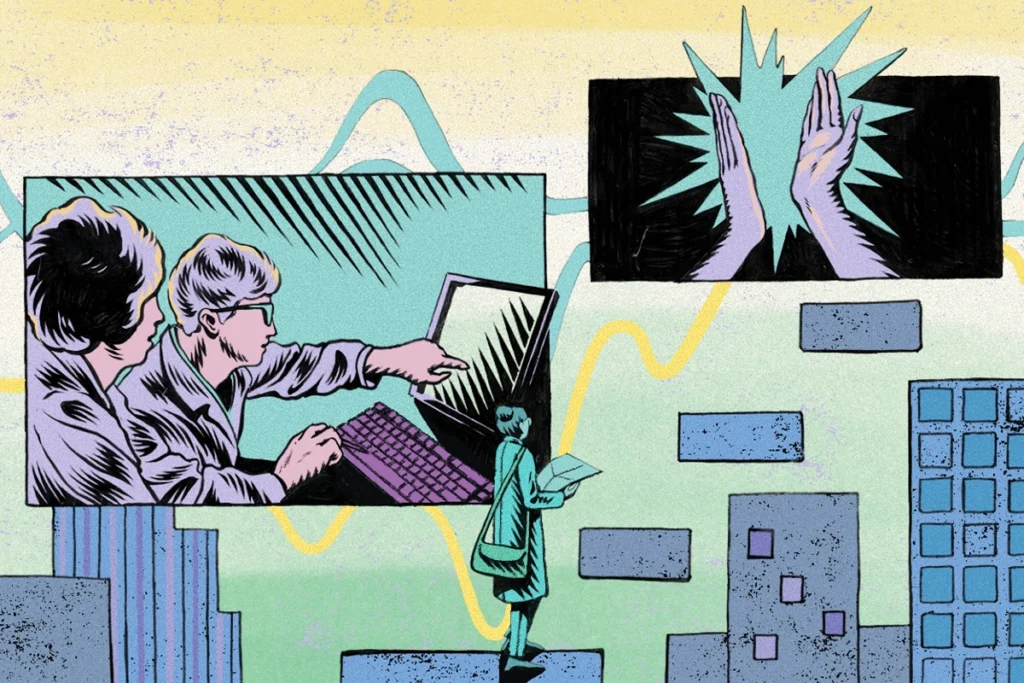
Should I work with these people? A guide to collaboration
By
Kevin Bender
10 September 2024 | 7 min read
Selected articles
- “Impaired cerebellar plasticity hypersensitizes sensory reflexes in SCN2A-associated ASD” | Neuron
- “Physical and functional convergence of the autism risk genes Scn2a and Ank2 in neocortical pyramidal cell dendrites” | Neuron
- “Arrestin-3 Agonism at Dopamine D3 Receptors Defines a Subclass of Second-Generation Antipsychotics That Promotes Drug Tolerance” | Biological Psychiatry
- “The Autism-Associated Gene Scn2a Contributes to Dendritic Excitability and Synaptic Function in the Prefrontal Cortex” | Neuron
- “Periadolescent Maturation of GABAergic Hyperpolarization at the Axon Initial Segment” | Cell Reports
Explore more from The Transmitter
Are Brains and AI Converging?—an excerpt from ‘ChatGPT and the Future of AI: The Deep Language Revolution’
In his new book, to be published next week, computational neuroscience pioneer Sejnowski tackles debates about AI’s capacity to mirror cognitive processes.
Are Brains and AI Converging?—an excerpt from ‘ChatGPT and the Future of AI: The Deep Language Revolution’
In his new book, to be published next week, computational neuroscience pioneer Sejnowski tackles debates about AI’s capacity to mirror cognitive processes.
By
Terrence Sejnowski
21 October 2024 | 12 min read
New tissue-clearing techniques let microscopes peer deeper into living brains
Washing mouse brain tissue with a blood protein or complex sugar can illuminate cells 550 micrometers into the cortex without compromising its normal physiology.
New tissue-clearing techniques let microscopes peer deeper into living brains
Washing mouse brain tissue with a blood protein or complex sugar can illuminate cells 550 micrometers into the cortex without compromising its normal physiology.
By
Calli McMurray
18 October 2024 | 0 min watch
New catalog charts familial ties from autism to 90 other conditions
The research tool reveals associations stretching across three generations.
New catalog charts familial ties from autism to 90 other conditions
The research tool reveals associations stretching across three generations.
By
Charles Q. Choi
17 October 2024 | 4 min read