ICHG 2011
Recent articles
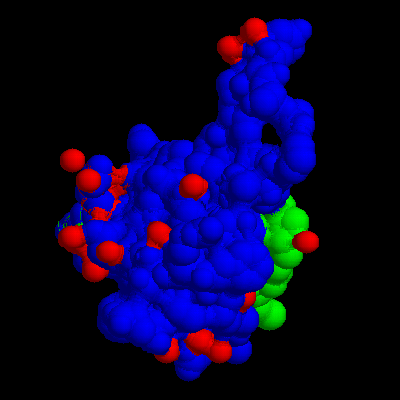
Growth factor improves autism symptoms in mice
Mice lacking a copy of SHANK3, a gene associated with autism and intellectual disability, show marked improvements in brain signaling after being treated with insulin-like growth factor 1, according to unpublished findings presented Saturday at the International Congress of Human Genetics in Montreal, Canada.
Growth factor improves autism symptoms in mice
Mice lacking a copy of SHANK3, a gene associated with autism and intellectual disability, show marked improvements in brain signaling after being treated with insulin-like growth factor 1, according to unpublished findings presented Saturday at the International Congress of Human Genetics in Montreal, Canada.
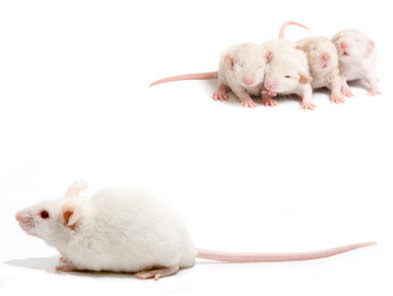
Researchers debut mice with links to Williams syndrome
Mouse pups with a duplication of GTF2I, a gene linked to Williams syndrome and autism, show extreme separation anxiety when separated from their mothers, according to unpublished findings presented Thursday at the International Congress of Human Genetics in Montreal, Canada.
Researchers debut mice with links to Williams syndrome
Mouse pups with a duplication of GTF2I, a gene linked to Williams syndrome and autism, show extreme separation anxiety when separated from their mothers, according to unpublished findings presented Thursday at the International Congress of Human Genetics in Montreal, Canada.
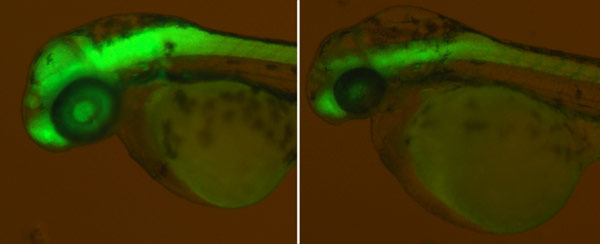
Fast-evolving gene is key player in brain development
A gene that changed rapidly after the human genome diverged from that of Neanderthals plays a critical role in brain development, according to unpublished results presented Thursday at the International Congress of Human Genetics in Montreal, Canada.
Fast-evolving gene is key player in brain development
A gene that changed rapidly after the human genome diverged from that of Neanderthals plays a critical role in brain development, according to unpublished results presented Thursday at the International Congress of Human Genetics in Montreal, Canada.
Explore more from The Transmitter
Are Brains and AI Converging?—an excerpt from ‘ChatGPT and the Future of AI: The Deep Language Revolution’
In his new book, to be published next week, computational neuroscience pioneer Sejnowski tackles debates about AI’s capacity to mirror cognitive processes.
Are Brains and AI Converging?—an excerpt from ‘ChatGPT and the Future of AI: The Deep Language Revolution’
In his new book, to be published next week, computational neuroscience pioneer Sejnowski tackles debates about AI’s capacity to mirror cognitive processes.
New tissue-clearing techniques let microscopes peer deeper into living brains
Washing mouse brain tissue with a blood protein or complex sugar can illuminate cells 550 micrometers into the cortex without compromising its normal physiology.
New tissue-clearing techniques let microscopes peer deeper into living brains
Washing mouse brain tissue with a blood protein or complex sugar can illuminate cells 550 micrometers into the cortex without compromising its normal physiology.

New catalog charts familial ties from autism to 90 other conditions
The research tool reveals associations stretching across three generations.
New catalog charts familial ties from autism to 90 other conditions
The research tool reveals associations stretching across three generations.