Yves Sciama is a freelance science writer, trained in biology and science journalism, who covers life and environmental sciences. His work has appeared in Science et Vie, Le Monde and other major French-language media, as well as in Science. He has won multiple prizes and fellowships, including a yearlong Knight Science Journalism Fellowship at the Massachusetts Institute of Technology in 2014, and is former president of AJSPI, the French association of science journalists.

Yves Sciama
Contributing writer
From this contributor
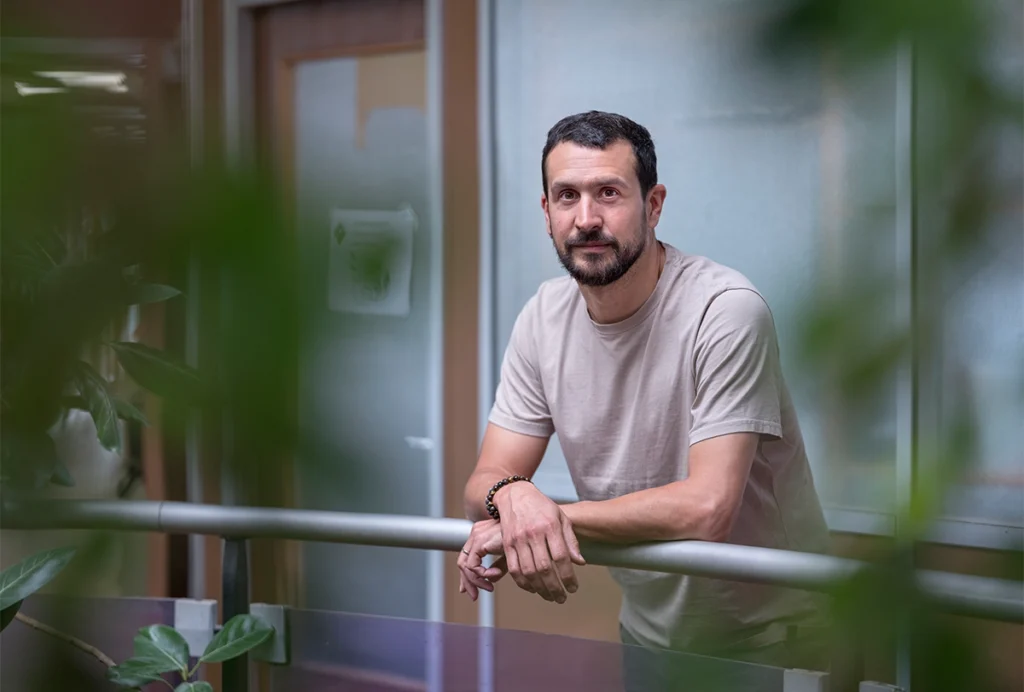
At the end of the earth with Paul-Antoine Libourel
The French researcher’s accomplishments working with chinstrap penguins in the Antarctic highlight the importance of recording sleep in the wild.
At the end of the earth with Paul-Antoine Libourel
By
Yves Sciama
11 June 2024 | 18 min listen
Explore more from The Transmitter
Are Brains and AI Converging?—an excerpt from ‘ChatGPT and the Future of AI: The Deep Language Revolution’
In his new book, to be published next week, computational neuroscience pioneer Sejnowski tackles debates about AI’s capacity to mirror cognitive processes.
Are Brains and AI Converging?—an excerpt from ‘ChatGPT and the Future of AI: The Deep Language Revolution’
In his new book, to be published next week, computational neuroscience pioneer Sejnowski tackles debates about AI’s capacity to mirror cognitive processes.
By
Terrence Sejnowski
21 October 2024 | 12 min read
New tissue-clearing techniques let microscopes peer deeper into living brains
Washing mouse brain tissue with a blood protein or complex sugar can illuminate cells 550 micrometers into the cortex without compromising its normal physiology.
New tissue-clearing techniques let microscopes peer deeper into living brains
Washing mouse brain tissue with a blood protein or complex sugar can illuminate cells 550 micrometers into the cortex without compromising its normal physiology.
By
Calli McMurray
18 October 2024 | 0 min watch

New catalog charts familial ties from autism to 90 other conditions
The research tool reveals associations stretching across three generations.
New catalog charts familial ties from autism to 90 other conditions
The research tool reveals associations stretching across three generations.
By
Charles Q. Choi
17 October 2024 | 4 min read