Tim Requarth is director of graduate science writing at the Vilcek Institute of Graduate Biomedical Sciences at the NYU Grossman School of Medicine, as well as research assistant professor of neuroscience and physiology.
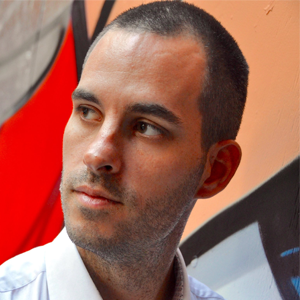
Tim Requarth
Director of graduate science writing, Research Assistant Professor of Neuroscience and Physiology
NYU Grossman School of Medicine
From this contributor
From bench to bot: Does AI really make you a more efficient writer?
A more significant benefit may lie in improving quality, refining tone and reducing cognitive burden. But beware of bias.
From bench to bot: Does AI really make you a more efficient writer?
By
Tim Requarth
3 September 2024 | 11 min read
From bench to bot: Boost your writing with AI personas
Asking ChatGPT to review your own grant proposals can help you spot weaknesses.
From bench to bot: Boost your writing with AI personas
By
Tim Requarth
5 April 2024 | 10 min read
From bench to bot: How to use AI to structure your writing
When given specific examples, ChatGPT can generate templates to help guide different types of documents.
From bench to bot: How to use AI to structure your writing
By
Tim Requarth
8 January 2024 | 11 min read
From bench to bot: How to use AI tools to convert notes into a draft
ChatGPT can capitalize on the highly ordered nature of scientific writing to streamline your writing process.
From bench to bot: How to use AI tools to convert notes into a draft
By
Tim Requarth
27 November 2023 | 10 min read
From bench to bot: A scientist’s guide to AI-powered writing
I was initially skeptical of artificial-intelligence tools such as ChatGPT for scientific writing. But after months of using and teaching generative artificial intelligence, I have come to realize that it has a place in the scientific writer’s tool kit, even if it can’t write that grant for you from scratch.
From bench to bot: A scientist’s guide to AI-powered writing
By
Tim Requarth
13 November 2023 | 6 min read
Explore more from The Transmitter
Are Brains and AI Converging?—an excerpt from ‘ChatGPT and the Future of AI: The Deep Language Revolution’
In his new book, to be published next week, computational neuroscience pioneer Sejnowski tackles debates about AI’s capacity to mirror cognitive processes.
Are Brains and AI Converging?—an excerpt from ‘ChatGPT and the Future of AI: The Deep Language Revolution’
In his new book, to be published next week, computational neuroscience pioneer Sejnowski tackles debates about AI’s capacity to mirror cognitive processes.
By
Terrence Sejnowski
21 October 2024 | 12 min read
New tissue-clearing techniques let microscopes peer deeper into living brains
Washing mouse brain tissue with a blood protein or complex sugar can illuminate cells 550 micrometers into the cortex without compromising its normal physiology.
New tissue-clearing techniques let microscopes peer deeper into living brains
Washing mouse brain tissue with a blood protein or complex sugar can illuminate cells 550 micrometers into the cortex without compromising its normal physiology.
By
Calli McMurray
18 October 2024 | 0 min watch
New catalog charts familial ties from autism to 90 other conditions
The research tool reveals associations stretching across three generations.
New catalog charts familial ties from autism to 90 other conditions
The research tool reveals associations stretching across three generations.
By
Charles Q. Choi
17 October 2024 | 4 min read